Why do I wake up tired even after sleeping?
By Marcelo Moreira, LMT (Florida massage therapy license MA103089). More than 27 years of clinical experience, Master's in Bioengineering, and PhD candidate in Health Sciences, Neuroscience track (Unisul). Orlando, FL. Published September 25, 2026.

You go to bed early, get your 7 or 8 hours, and when the alarm goes off, it feels like you didn't sleep at all.
Your body feels heavy. Your mind is slow to switch on. Breakfast feels like a chore, and by afternoon your energy is already gone.
If this happens to you, know that you are not alone. And there are real clues worth looking into. Here you will see what may be behind this tiredness, when it makes sense to see a doctor first, and which simple habits often help.
Sleeping a lot is not the same as sleeping well
The CDC (the U.S. public health agency) recommends that adults sleep 7 hours or more per night. But the clock only tells part of the story.
Sleep moves through stages during the night, and each one plays a role in helping your body and brain recover. If that cycle gets interrupted many times (by noise, heat, pain, trips to the bathroom, or wake-ups you don't even remember), the night can be long and still not very restful.
That is why the more useful question is usually "how did I sleep?" and not just "how much did I sleep?".
Irregular routine, screens, and caffeine
Some everyday factors can play a big part in sleep that doesn't feel restful:
- Bedtimes that change a lot. Going to sleep at 11 p.m. during the week and at 2 a.m. on weekends can throw off your body's internal clock.
- Screens late at night. The bright light from phones, TVs, and computers can signal to your brain that it is still daytime, according to the NHLBI (the NIH institute focused on the heart, lungs, and blood).
- Caffeine late in the day. The same NHLBI notes that the effects of caffeine can last up to 8 hours. That 4 p.m. coffee may still be working when you turn off the light.
- Alcohol and heavy meals close to bedtime. They may make you sleepy at first, but they are linked to a more broken-up night.
Stress and a nervous system that won't switch off
Here is something many people don't know about: the autonomic nervous system.
It runs on "autopilot" and has two main modes. One is alert mode, which gets your body ready to act (faster heartbeat, tighter muscles). The other is rest-and-recovery mode, which helps your body slow down, digest, and repair itself.
For sleep to be restful, ideally the rest mode takes over more at night. One idea that sleep researchers are studying is that long-lasting stress (a demanding job, money worries, adjusting to a new country, missing your family) may keep the body in alert mode during the night too. In that case, you can sleep the right number of hours and still feel like your rest was not complete.
This doesn't explain every case. But it is worth considering, especially if your tiredness gets worse during the more stressful times in your life.
Built-up physical tension
A stiff neck, locked-up shoulders, a clenched jaw when you wake up. Muscle tension from the day can make it harder to get comfortable in bed and add to a more restless night.
It often goes hand in hand with stress.
Medical causes that need to be checked
Waking up tired can also be linked to health conditions that only a doctor can evaluate. According to the NHLBI and MedlinePlus (the NIH health library), these include:
- Sleep apnea, when breathing stops and starts again several times during the night;
- Thyroid problems;
- Anemia;
- Depression;
- Side effects of some medications, such as certain allergy medicines and sedatives.
If you take a medication and think it may be affecting your sleep, talk to the person who prescribed it. Do not stop it or change the dose on your own.
Simple habits that often support more restful sleep
These tips appear in guidance from the CDC, the NHLBI, and the Sleep Foundation. Pick two or three to start:
- Keep a regular schedule. Go to bed and wake up at about the same time every day, including weekends (with no more than about an hour of difference).
- Get natural light in the morning. A few minutes outdoors early in the day help your internal clock know the day has started. In Orlando, there is no shortage of sun.
- Set a cutoff time for caffeine. Since the effects of caffeine can last up to 8 hours (NHLBI), it is a good idea to avoid it in the afternoon and evening.
- Create a wind-down routine. In the last hour before bed, dim the lights, keep your phone away, and choose something calm: reading, a warm bath, gentle stretching.
- Practice slow breathing. A systematic review published in Frontiers in Human Neuroscience found, in small studies with healthy people, a link between slow breathing (fewer than 10 breaths per minute) and signs of more activity in the nervous system's rest mode. These studies did not measure sleep directly, but the practice is simple and safe for most people. Try breathing in while counting to 4 and breathing out while counting to 6, for a few minutes.
- Move your body during the day. Regular physical activity is linked to better sleep. Just avoid intense workouts close to bedtime.
- Take care of your bedroom. Dark, quiet, and cool. Florida air conditioning can be your ally here.
Habit changes take time to show results, and everyone responds differently. If nothing changes after a few weeks, that is a sign to look deeper with your doctor.
How IFWC can help
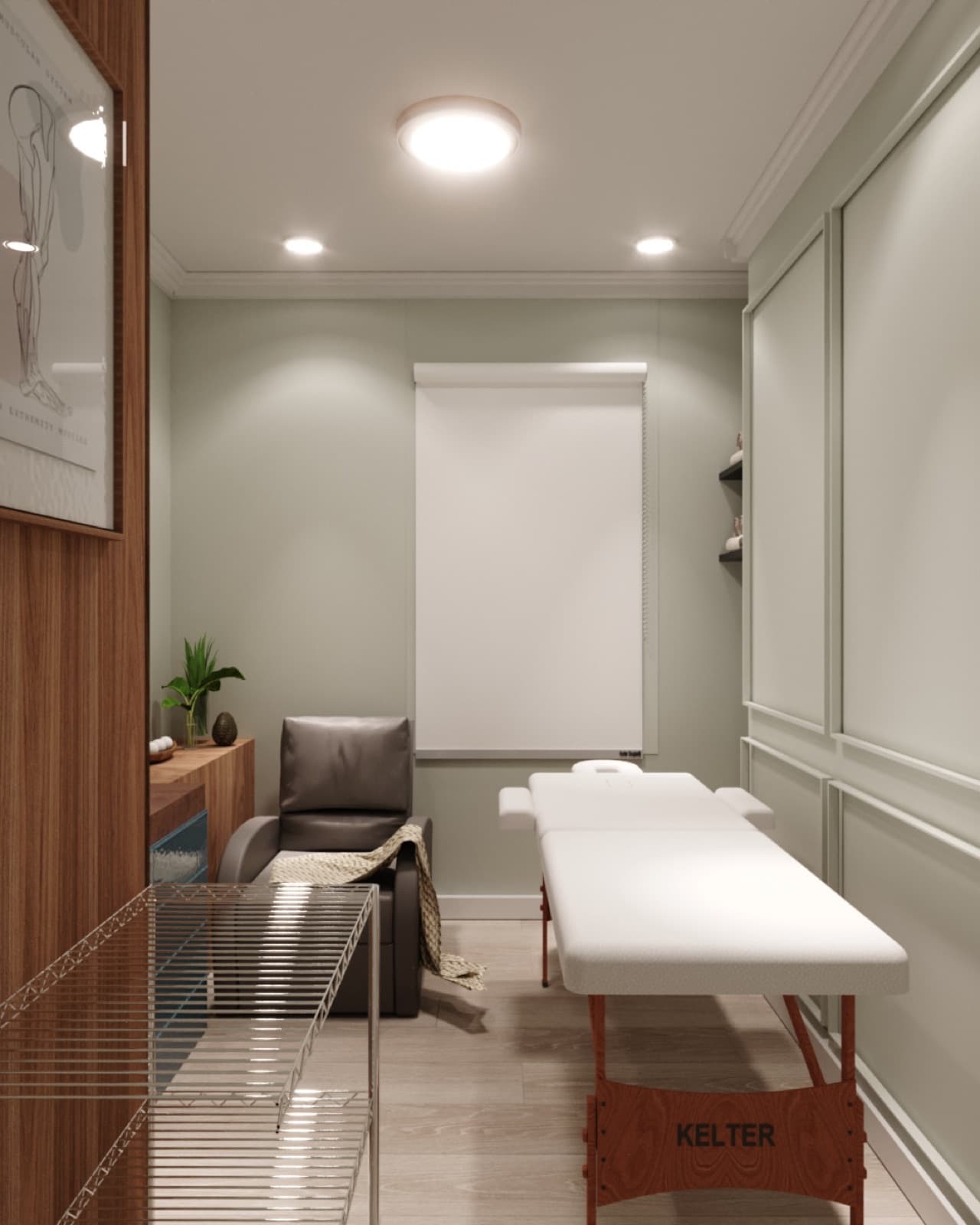
At IFWC in Orlando, we offer complementary wellness care for people who want to better understand their own bodies. This care works alongside your medical care, never in place of it.
The starting point is a 90-minute evaluation, which includes:
- Unhurried listening about your routine, your sleep, and what has been weighing on you day to day;
- Complementary wellness measurements, which are not medical tests or a diagnosis, and help organize what you are feeling and track your progress;
- Mapping how your body is handling everyday pressure, including signs of built-up tension.
From there, manual therapy may be part of a wellness plan, with the goal of easing muscle tension and supporting relaxation. It is not a treatment for sleep disorders, depression, or other health conditions. If anything in the evaluation points to the need for a medical visit, we will guide you to seek one.
We see clients in English, Portuguese, and Spanish, so you can explain everything in your own words.
Want to better understand what your body is showing you? We see clients in Orlando in English, Portuguese, and Spanish.
References
- National Heart, Lung, and Blood Institute (NHLBI/NIH). Sleep Apnea: Symptoms. https://www.nhlbi.nih.gov/health/sleep-apnea/symptoms
- National Heart, Lung, and Blood Institute (NHLBI/NIH). Sleep Deprivation and Deficiency: Healthy Sleep Habits. https://www.nhlbi.nih.gov/health/sleep-deprivation/healthy-sleep-habits
- Centers for Disease Control and Prevention (CDC). About Sleep. https://www.cdc.gov/sleep/about/index.html
- MedlinePlus (U.S. National Library of Medicine). Fatigue. https://medlineplus.gov/ency/article/003088.htm
- Sleep Foundation. Sleep Hygiene. https://www.sleepfoundation.org/sleep-hygiene
- Zaccaro A, Piarulli A, Laurino M, et al. How Breath-Control Can Change Your Life: A Systematic Review on Psycho-Physiological Correlates of Slow Breathing. Frontiers in Human Neuroscience, 2018. https://www.frontiersin.org/journals/human-neuroscience/articles/10.3389/fnhum.2018.00353/full
This content is informational and does not replace a medical evaluation. Massage therapy does not diagnose, treat, or cure any disease. If you have questions about sleep, mood, or medications, talk to your doctor.